


Tranquilo, hermano, yo te lo hago.
And that’s where a story begins that, among Latin Americans living in Italy, too many people already know all too well.
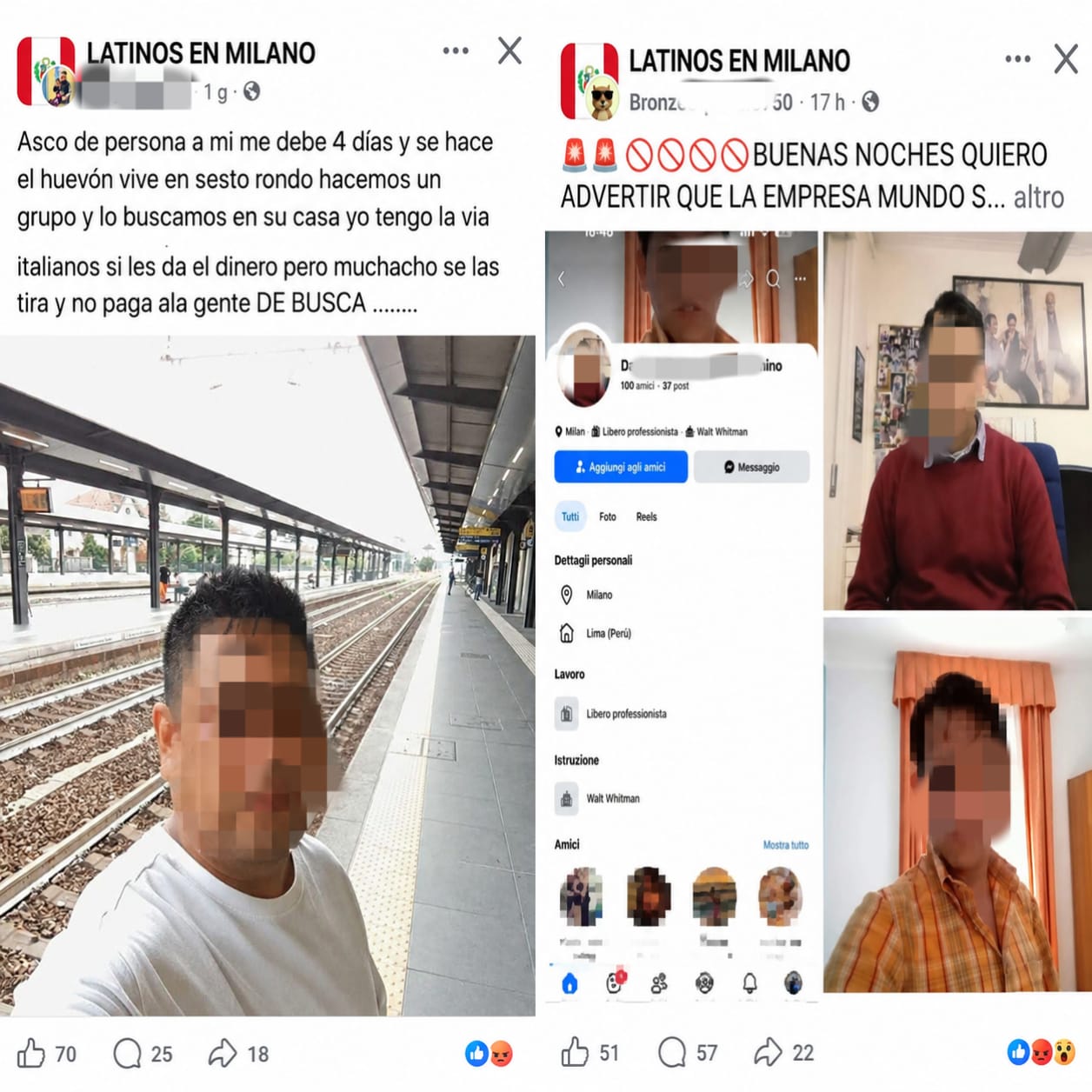
It may sound like a provocation. But spend a few minutes on social media and you’ll quickly realize how real the problem is.
“Don’t trust this person.”
“I paid and they never finished the job.”
“They promised me one thing and did another.”
“They took the money and disappeared.”
The warnings keep coming.
And yet new people keep falling for the same thing. Sometimes, incredibly, with the very same people who have already been reported.
Why?
Because the internet has a long memory, but the need of someone who has a problem today is stronger.
You need someone to do a job? You search, you find someone, you ask the price, you pay.
And most of the time, you’re not thinking about what happened to someone else six months ago.
We’re not back in our little pueblo
For many Latin Americans who arrive in Italy, a fellow countryman is often the first person they turn to.
Same language.
Same culture.
Maybe they know how things work.
That can be a huge advantage.
But it can also become a vulnerability.
Someone who knows their community well also knows the difficulties of those who have just arrived: limited Italian, no real network, little knowledge of procedures, fear of making mistakes or asking for help.
The Peruvian community, for example, has built a very strong network in Italy. And precisely because that network is strong, in some cases it can also become fertile ground for people who take advantage of the trust of their own community.
Not because “Peruvians are like that.”
Quite the opposite.
Because the network is strong, when someone abuses that trust, the damage is even greater.
Helping your paisano is one thing.
Knowing exactly where they are vulnerable and using it against them is something completely different.
But Facebook is not a courtroom
Let’s be honest about this too.
A complaint on social media can be useful.
But it is not a verdict.
The customer may be right.
But there may also have been a misunderstanding, a poorly explained request, work that was carried out differently from what the customer expected, or, in some cases, an exaggerated accusation.
A serious professional deserves protection too.
A screenshot does not automatically tell the whole story.
A photograph doesn’t necessarily tell the whole story either.
The problem is that today we often have only two options:
trust someone, or complain after something goes wrong.
And neither is enough.
The payment comes first. Protection often comes later.
Paying has become incredibly easy.
Bank transfer. Card. Cash. Payment link.
A few seconds and it’s done.
But when something goes wrong?
You go back into WhatsApp looking for messages, voice notes, quotes and promises.
“But you said…”
“That’s not what I understood…”
“That’s not what we agreed…”
And eventually comes the classic:
“Go ahead and report me. I’m not afraid.”
But a complaint does not automatically solve the problem.
And for someone with little money, limited Italian or no real support network, the cost and effort of dealing with the situation can be enough to make them simply give up.
And that is exactly where opportunists thrive.
Something needs to happen before
Not revenge.
Not threats.
Not fifty posts about the same person.
Something that happens before.
Before the payment.
Before the problem.
Before everything ends up in an endless WhatsApp argument.
You should know who is providing the service, what they are supposed to do, how much it costs, what was actually agreed and when the job can be considered completed.
It sounds obvious.
Yet it is exactly what is often missing.
And this is where a model like GoalValor comes into the picture: not simply putting someone in touch with a person who says they can do a job, but structuring the relationship around the goal that needs to be achieved, making the path between request, service and result clearer.
Technology cannot make a dishonest person honest.
But it can make it harder to be unclear.
It can leave a record.
It can define the service more clearly.
It can give the customer more tools.
And it can protect the serious professional too.
Because the difference matters
Someone who works well builds a reputation over time.
Someone who takes the money and disappears simply looks for the next person who has never heard of them.
They are not the same.
And a serious market should be able to tell the difference.
Maybe we need to stop asking only:
“Do you know someone who can do it?”
And start asking:
“What is the safest way to get it done?”
Because the review comes later.
The complaint comes later.
The social media post comes later.
The real solution should try to intervene before.
Not to eliminate risk, that would be a ridiculous promise, but to reduce it and keep it under control.
Because technology can change almost everything.
But a person’s word should still mean something.